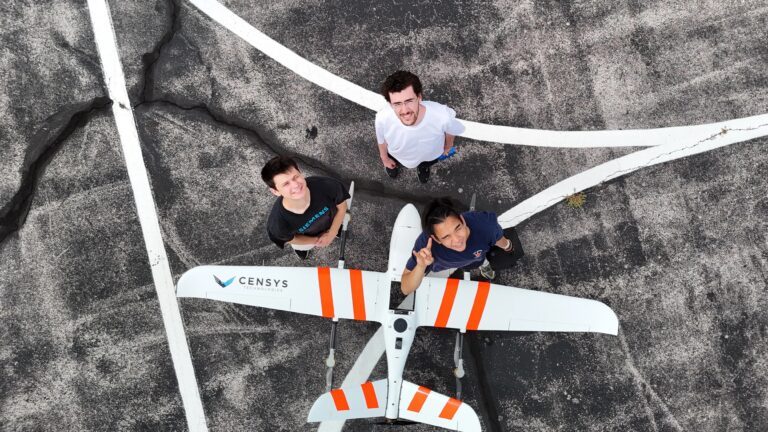
Daniela Rus receives Bavarian Minister-President's High-Tech Prize
Director of CSAIL and MIT professor honored for her contributions to robotics, artificial intelligence, and autonomous systems.
Category
Machine learning, foundation models, and autonomous systems.
The central bet in robot learning right now is that manipulation will follow the trajectory language did: train a large model on enough demonstration data and general capability emerges. Vision-language-action models, which map camera input and an instruction straight to motor commands, are the clearest expression of that bet.
The obstacle is data. There is no internet-scale corpus of robots doing physical work, and the substitutes all have costs — teleoperated demonstrations are slow and expensive to collect, and simulation is cheap but transfers imperfectly to real hardware. Much of the field's current effort goes into narrowing that gap.
Autonomous driving is worth watching as the closest precedent: a decade of well-funded work showed that the last few percent of reliability is far harder than the first ninety, and that supervised demonstrations tend to look much better than unsupervised deployment.
Director of CSAIL and MIT professor honored for her contributions to robotics, artificial intelligence, and autonomous systems.
These five platforms address different challenges and provide the basis for the emerging physical AI tech stack, according to Lightwheel. The post 5 Physical AI infrastructure platforms shaping robotics in 2026 appeared first on The Robot Report.
Teradyne Robotics said growth in the U.S. and in AI were big drivers for its revenue increase in the second quarter of 2026. The post Teradyne Robotics revenue rises 33% year over year in Q2 appeared first on The Robot Report.
With the explosion of robotics research, staying current in fields like Learning from Demonstration (LfD) is a monumental challenge. Is AI the solution to the “paper deluge,” or is it part of the problem? Read the article preview below to learn more! Download the full paper:…
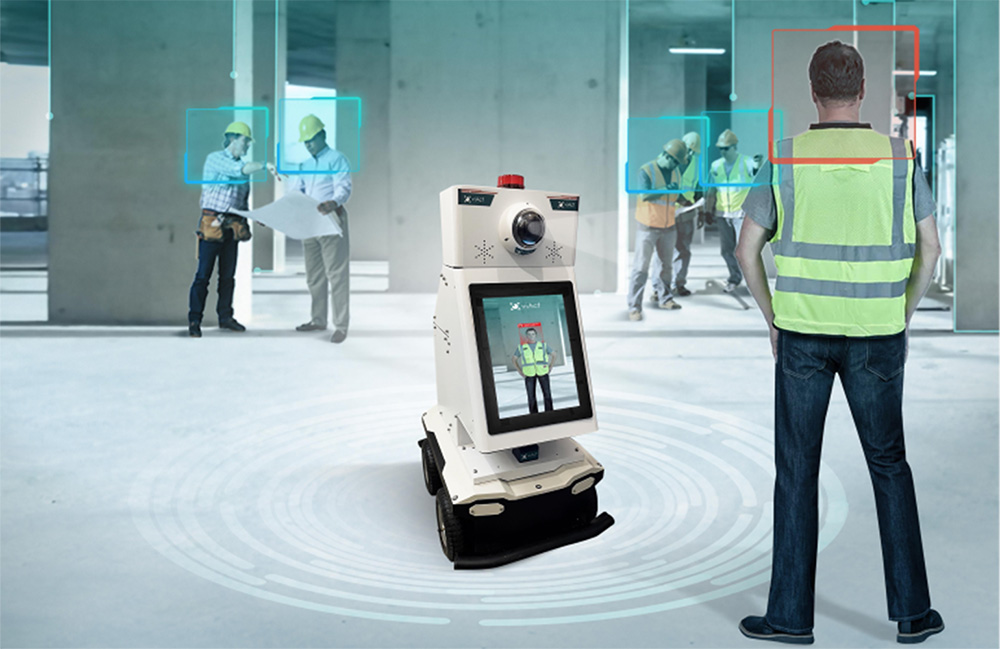
Why pay to design and mass-produce a four-wheeled autonomous security robot, when you can make a less costly one with just one wheel? That's the thinking behind the 1Rollo, a monowheel-bot that could soon be patrolling near you. Continue Reading Category: Robotics, Engineering…
Forget YouTube videos — frontier physical AI models need multiple camera angles, dense annotation, and, soon, brain wave readings.
Atop a lab bench, Cornell Tech postdoctoral researcher Yifan He positions the lens of an optical receiver almost a meter away from an LED emitting a beam of red light. The computer monitor attached to the receiver takes a beat to refresh, then displays an array of squares that…
MIT students designed, built, and tested a jet engine with AI copilots, assessing AI’s usefulness in developing high-performance aerospace systems.
“SceneSmith” system uses collaborative AI agents to create realistic 3D environments of places like kitchens, hotels, and living rooms, where robots can simulate everyday chores.
This article is brought to you by X Square Robot. Large language models gave artificial intelligence a working recipe. Pretrain a large model on broad data, and general capability follows. Robotics has no such recipe. Robotics systems have long been assembled from separate…
Water’s odd behavior becomes even more dramatic when it is supercooled, but scientists have struggled to compare the many different ways of describing its microscopic structure. Researchers at the University of Osaka used an AI model trained on computer simulations to evaluate…
Forterra has deployed more than 100 of its self-driving ATVs in conflict zones in Ukraine.
To help robots do chores in places like homes and factories, a new approach from MIT uses one language model to clarify users’ instructions, then another to ignore irrelevant info.
During the AI and Society Forum, leading MIT researchers examined critical questions about AI’s influence on employment and democracy.
A new spatial memory system for robots efficiently captures details about the objects they see while exploring their environment.
An examination of how socially assistive wellness robots could support the seven dimensions of senior wellness, and how a framework can measure their autonomy. What Attendees will Learn Why the senior care crisis exceeds incremental automation. Demographic pressure, workforce…
Scientists found that transfer learning can make the search for new physics in the universe much faster, slashing the need for expensive simulations. Yet the approach can backfire when AI relies too heavily on familiar patterns, potentially missing evidence of something truly…
Claire chatted to Ahti Heinla from Starship Technologies about their AI-powered delivery robots that operate independently on streets and pavements. Ahti Heinla is the co-founder and CEO of Starship Technologies, the world’s leading autonomous delivery company building…
A new AI-powered chip from UC Davis can analyze light and chemicals using a device tiny enough to fit almost anywhere. By combining smart silicon sensors with machine learning, it achieves lab-style spectral analysis without the bulky equipment.
Claire chatted to Josie Hughes from École Polytechnique Fédérale de Lausanne about using AI to develop new designs for robotic manipulators. Josie Hughes is an Assistant Professor at EPFL, where she established the CREATE Lab in 2021. She completed her PhD in the Bio-inspired…
Electric vehicles are pushing scientists to tackle one of the biggest hidden energy drains inside electric motors: magnetic energy loss. Now, researchers in Japan have developed a powerful AI-driven physics model that can peer into the chaotic “maze-like” magnetic patterns…